
A DUI notice from a Florida officer can start a fast clock. Your temporary permit may end at midnight on day 10, and you usually have just 10 days to request an administrative review.
That deadline catches many drivers off guard. The license case runs through the Florida Department of Highway Safety and Motor Vehicles, separate from any DUI criminal charge. Traffic tickets, unpaid fines, and insurance issues can also trigger a suspension.
This guide explains how to check your status, protect key deadlines, prepare proof, and seek a Florida hardship license if needed. It also covers the risks of driving while suspended and the final steps for Florida license reinstatement. Rules and forms matter here, so treat each notice seriously and keep records for your Florida license reinstatement request.
Step 1: Identify the Suspension and Protect the 10-Day Deadline
What the 10-Day Rule Means
After a DUI arrest, read the notice or citation at once. It may act as a temporary driving permit for 10 days. To challenge the administrative suspension, file for a formal or informal review with the Bureau of Administrative Reviews within that window. Florida’s review request form requires a $25 fee and a citation copy.
- Mark the arrest or notice date.
- Save every paper the officer gave you.
- Request the review before day 10, not on day 10.
Warning: Missing the deadline usually gives up your right to challenge this immediate suspension. Ask about hardship-license options separately.
Administrative Suspension Versus Criminal DUI Case
These are two different matters. The administrative case concerns your driving privilege. The criminal DUI case concerns guilt, penalties, and court dates.
| Matter | Who decides it | Main question |
|---|---|---|
| Administrative review | DHSMV Bureau of Administrative Reviews | Was the suspension legally valid? |
| Criminal DUI case | Criminal court | Can the state prove DUI? |
At a formal review, the hearing officer may consider records and witness testimony. An informal review uses documents only. Florida DHSMV confirms that BAR handles these review hearings, while a DUI court case follows its own path in the criminal system. Keep both calendars, notices, and deadlines separate.
Also Read: Home
Step 2: Check Your Florida Driving Record and Suspension Status
What to Confirm on the Record
Use FLHSMV’s Driver License Check right away. It shows whether the state lists your license as valid, suspended, revoked, or otherwise restricted.
Confirm these details against every notice you received:
- The start date and end date of each suspension
- The exact reason and case, citation, or court number
- Any points, missed court date, unpaid fine, insurance lapse, or DUI action
- Whether a reinstatement fee or school requirement appears
- Whether more than one hold blocks reinstatement
For a fuller history, order a 3-year, 7-year, or complete record. FLHSMV says the record can show points and where citations were issued.
When the Record Does Not Match the Notice
Save screenshots, print the result, and keep the notice. A “VALID” result means FLHSMV has cleared the record, and its online check guidance says you may print it as your current official receipt.
Do not assume a mismatch means you can drive. Take these steps:
- Call the court or agency named on the notice.
- Ask what action remains open and request written proof.
- Give that proof to FLHSMV if needed.
- Speak with a DUI or traffic lawyer before a deadline passes.
Warning: A court may clear one citation while a separate suspension still blocks your license.
Also Read: Blog
Step 3: Choose Formal Review, Informal Review, or a Restricted-License Route
Informal Review: Record-Based Examination
Choose an informal review if the key issue appears in the paperwork. A hearing officer reviews documents from you and law enforcement. No one gives live testimony.
- Attach the citation, notice, and records that show an error.
- Use it when facts are clear and witnesses are not needed.
- File within 10 days of arrest or notice, with the $25 fee.
Florida’s review request form confirms that informal reviews consider documents only.
Formal Review: Hearing and Evidence
Choose a formal review if testimony could expose a weak point. You may question witnesses and submit relevant evidence. This can matter when the stop, arrest, test request, or notice process is disputed.
| Route | Evidence allowed | Best fit |
|---|---|---|
| Informal review | Written records only | Clear document error |
| Formal review | Records and witness testimony | Facts need testing |
| Restricted license | Eligibility documents | You need limited driving now |
A review challenges the administrative suspension. It does not decide the DUI criminal case.
Restricted Driving Privilege and Hardship License
A restricted license may be the practical choice if you need to work, attend school, or handle medical care. It usually limits you to business purposes only.
- Apply through the Bureau of Administrative Reviews.
- Provide required course enrollment and supporting records.
- Know that accepting a DUI eligibility review
Step 4: Prepare and Submit a Strong Review Request
Build the Evidence Packet
Keep the request focused on the facts BAR may review. Include clear copies of:
- The suspension notice or DUI citation
- Your driver license and driving record
- Arrest reports, breath or blood test papers, and video requests
- Witness names and short written statements, if useful
- Notes showing time, location, and what officers said or did
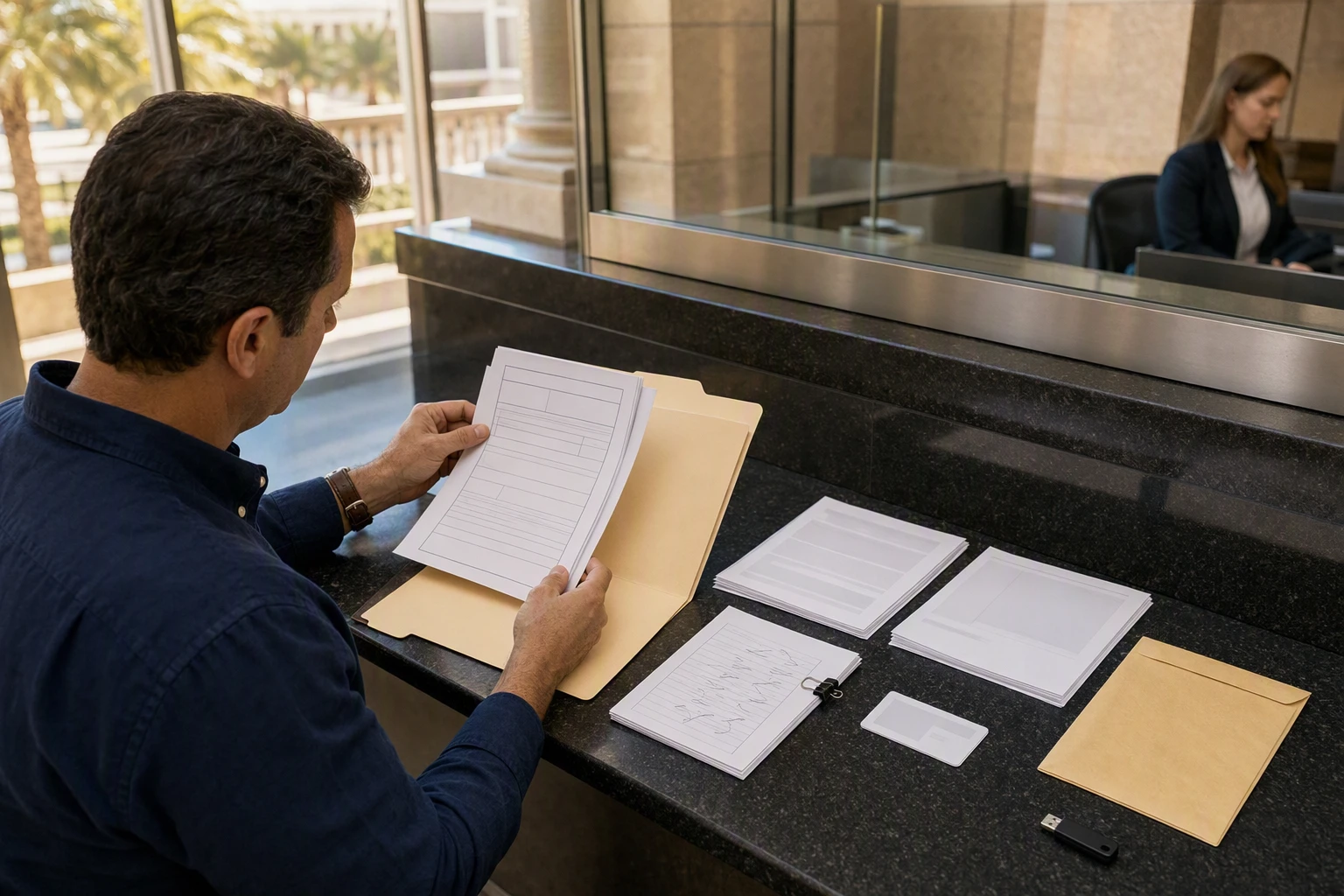
A formal review can include relevant evidence and witness testimony. An informal review uses documents only, according to the FLHSMV review application.
Tip: Do not write a long personal story. Flag exact errors, missing proof, or facts that weaken the stated basis for suspension.
File on Time and Keep Proof
Submit the correct request form, citation copy, and $25 filing fee to the BAR office listed on your notice. FLHSMV requires submission within 10 days of the arrest or notice date, whichever is later.
- Make a full copy of everything.
- Get a stamped receipt, email confirmation, or tracked-delivery record.
- Save the hearing notice and calendar every deadline.
- Ask counsel to review the packet before filing if facts are disputed.
Missing the deadline can cost you the chance to challenge the administrative suspension, even while the DUI criminal case continues.
Also Read: Arrested For Dui In Florida
Step 5: Attend the Review, Follow Restrictions, and Track the Decision
Prepare for the Hearing or Decision
Bring your notice, request receipt, driving record, and copies of every document you submitted. At a formal review, you may present relevant evidence and witness testimony. An informal review relies only on written materials, according to the FLHSMV review request form.
- Arrive early or join the call on time.
- Keep answers short and truthful.
- Do not discuss facts beyond the review issues without legal advice.
- Save the hearing notice and final order.
A DUI administrative review is separate from the criminal DUI case. One result does not automatically control the other.
Understand the Possible Outcomes
The hearing officer may sustain, amend, or invalidate the suspension. If it is invalidated, confirm your driving status before driving. If sustained, ask what you need for reinstatement or a business-purpose-only license.
| Result | What it means | Your next move |
|---|---|---|
| Invalidated | Suspension is removed | Confirm your record is updated |
| Sustained | Suspension stays in place | Follow all limits and plan reinstatement |
| Restricted license approved | Driving is limited to allowed purposes | Carry proof and obey every restriction |
Do not drive until FLHSMV records show you are legally cleared or restricted to drive.
Also Read: Areas Served
Step 6: Complete Florida License Reinstatement and Avoid New Penalties
Use a Reinstatement Checklist
Before you visit a service center, confirm every hold is cleared through the FLHSMV license status system. Bring:
- Proof you paid tickets, court costs, or child support
- Course completion or enrollment records
- Insurance proof, including FR-44 if required
- Any court order or hardship approval
- Money for reinstatement and license fees
A cleared court case does not always mean your driving privilege is active. Check first.
Do Not Drive While Suspended
Do not drive until FLHSMV shows your license as valid. A ride to work can become a new criminal charge, added fees, and a longer loss of driving rights.
- Use rides, transit, or a licensed driver.
- Follow every hardship-license limit exactly.
- Keep proof of reinstatement with you after approval.
Florida lists different reinstatement steps based on the reason for suspension, so resolve each listed suspension before driving.
Your suspension deadline may be close. Contact Law Offices of John Olea, P.A. to review your notice, protect your hearing rights, and pursue the best path back to driving.
Frequently Asked Questions
Q1: What’s the 10-day rule for challenging a Florida DUI license suspension?
You generally have 10 days from arrest to request a formal or informal review hearing. Missing it usually waives the hearing, though you may still qualify for a hardship license.
Q2: How can I check if my Florida driver’s license is suspended?
Check your record through Florida’s driver license status system or contact the DHSMV. Confirm the suspension reason, start date, reinstatement fees, and any court holds.
Q3: What are the penalties for driving with a suspended license in Florida?
Penalties depend on knowledge and prior cases. A knowing violation can bring criminal charges, fines, jail risk, probation, and a longer suspension.
Q4: Can I get a hardship license while my suspension is pending?
Possibly. Eligibility depends on the suspension type, your record, and required courses. A hardship license limits driving to approved work, school, medical, or essential purposes.
Conclusion
Act fast, because a Florida DUI notice can trigger an immediate suspension and a short window to seek review. The FLHSMV review form states that a formal or informal review request generally must reach the Bureau of Administrative Reviews within 10 days.
- Verify every active hold on your driving record.
- Keep the administrative suspension separate from the criminal DUI case.
- Gather reports, notices, test records, and witness details before any hearing.
- Consider a hardship license only after you understand its limits.
- Do not drive until your privilege is valid or properly restricted.
A missed deadline can narrow your choices, while complete records can help you challenge the suspension or meet reinstatement rules.