
Quick Summary: A Florida drug arrest can spiral into felony charges with mandatory minimums, but the case often hinges on small details like whether the stop was legal, who knew about the drugs, and how the lab handled evidence. Your first moves matter most: invoke your right to remain silent clearly, ask for a lawyer, and never consent to a search. A defense attorney can challenge the search, the chain of custody, or the knowledge element to get charges reduced or dropped, and first-time offenders may qualify for drug court diversion that dismisses charges upon completion. The Law Offices of John Olea, P.A. defends clients across Palm Beach and Broward Counties and offers free consultations to review your case from day one.
A small bag found in a shared Florida vehicle can lead to very different outcomes. Who knew it was there, who controlled the car, what the lab says the substance is, and how much it weighs all change the case. Drug crime charges in Florida range from a misdemeanor to a felony with prison time, and early mistakes – talking to police, skipping a hearing, waiting to hire a lawyer – can make things worse fast. This guide walks you through what to do right after an arrest, how Florida drug laws work, and what a strong drug possession defense looks like. The Law Offices of John Olea, P.A. defends clients facing drug crime charges across Palm Beach and Broward Counties, and this page shares what we tell every client in the first days of a case.
What Counts as a Drug Crime in Florida?
Florida’s drug laws live in Chapter 893 of the Florida Statutes. They cover everything from simple possession to trafficking, and the same drug can trigger very different charges depending on what police say you did with it.
Possession and Constructive Possession
You do not have to hold drugs to be charged. Actual possession means the drug is on you, like in a pocket or bag. Constructive possession means it was near you and police claim you knew it was there and had control over it. Think drugs in a shared car or a friend’s apartment. Under Chapter 893, even paraphernalia carries its own charge. The state must prove knowledge, and that is often the weak point in the case.
Sale, Delivery, Manufacturing, and Trafficking
These charges are more serious because they involve moving drugs, not just having them. Under Section 893.13, selling, delivering, or making a controlled substance is a felony, and penalties climb higher near schools or parks. “Delivery” is broad. Handing a pill to a friend counts, even with no money involved. Trafficking sounds like smuggling, but it is really a weight-based charge. Possessing 28 grams or more of cocaine, for example, is trafficking with mandatory prison time.
Also Read: Blog
What Are the Penalties for Drug Crimes in Florida?
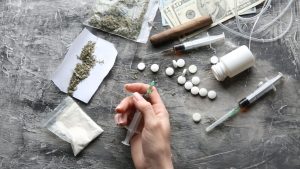 Florida punishes drug crimes by drug type and weight. The penalties range from a year in jail to life in prison.
Possession, Paraphernalia, and Distribution Penalties
Simple possession of most controlled substances is a third-degree felony under Florida Statute 893.13. That carries up to 5 years in prison and a $5,000 fine. Less than 20 grams of cannabis is a first-degree misdemeanor, with up to 1 year in jail.
| Offense | Level | Max Penalty |
|---|---|---|
| Cannabis under 20 grams | Misdemeanor | 1 year, $1,000 fine |
| Other drug possession | 3rd-degree felony | 5 years, $5,000 fine |
| Sale of Schedule I or II | 2nd-degree felony | 15 years, $10,000 fine |
| Sale near a school or park | 1st-degree felony | 30 years |
Selling near schools, parks, or places of worship raises the charge. Location alone can double the prison exposure.
Trafficking Thresholds and Mandatory Minimums
Trafficking is a weight-based charge. Under Florida Statute 893.135, no proof of selling is needed. Possession above the threshold triggers it.
- Cocaine: 28 grams or more means a 3-year mandatory minimum and $50,000 fine.
- Heroin or fentanyl: 4 grams or more triggers trafficking.
- Cannabis: over 25 pounds triggers it.
Only substantial assistance to police can reduce these minimums. An attorney can challenge lab weight, searches, and possession to fight the charge before conviction.
Also Read: Areas Served
What Should You Do After a Drug Arrest in Florida?
The first hours after a drug arrest matter more than most people realize. Officers and prosecutors start building their case right away, and small mistakes early on can hurt you later. Stay calm, stay polite, and focus on two things: saying less and getting a lawyer fast.
Use Your Right to Remain Silent
Give your correct name and identification, then stop there. Say clearly: “I am invoking my right to remain silent, and I want a lawyer.” Vague silence is not enough. Courts require an unambiguous statement before questioning must stop. Do not explain, apologize, or try to talk your way out. As Florida legal guidance on arrest rights explains, your silence cannot be used against you, but your words can. Also skip the jail phone. Calls are recorded, so only tell family where you are and to arrange counsel.
Preserve Information and Contact Counsel
You will see a judge within 24 hours for a first appearance. An attorney can argue for lower bond or release conditions there. Keep every paper you receive: the arrest affidavit, property receipt, bond paperwork, and court date notice. Write down what happened while it is fresh, and share it only with your lawyer. If you were arrested in Palm Beach or Broward County, the Law Offices of John Olea, P.A. can step in quickly, review how the stop and search were handled, and protect your rights from day one.
How Can a Drug Crime Lawyer Challenge the Case?
A strong defense starts by testing how police got the evidence. Even solid-looking drug cases can collapse when one link in the chain fails.
Search, Seizure, Consent, and Stops
Most drug cases begin with a stop, a search, or a knock on the door. Your lawyer checks each step: Did police have a lawful reason to stop the car? Did they stretch a traffic stop into a drug investigation? Did someone truly have the right to consent to a home search? If any step broke the rules, your attorney can file a motion to suppress. If the judge agrees, the drugs may be kept out of court, and the case often falls apart. Florida courts examine every exception police claim, from consent to plain view, and the facts must actually support it.
Knowledge, Control, Identity, and Laboratory Proof
The State must also prove whose drugs they were. Finding drugs in a shared car or apartment is not enough. Prosecutors must show you knew about the substance and had control over it. The lab work matters too: a broken seal, a missing transfer log, or sloppy testing can raise doubt that the tested substance is the same one seized. Chain-of-custody gaps are common attack points, and Florida’s knowledge rules give jurors room to find reasonable doubt.
Also Read: How to Challenge a Driver’s License Suspension in Florida
Could Drug Court or Diversion Be an Option?
If addiction played a role in your arrest, a treatment-based drug court may be a better path than a conviction. Florida law authorizes these programs under Section 397.334, and Palm Beach County’s Drug Court accepts people with pending felony or misdemeanor drug charges, excluding trafficking, sales, and violent or domestic battery records.
Eligibility and Program Conditions
- You must enter voluntarily and sign a written agreement.
- You need a assessed substance abuse problem and a qualifying charge.
- You must be a county resident, at least 18, with no other open cases.
- Programs require counseling, random drug testing, close supervision, and weekly fees.
Benefits, Risks, and Completion
Finish the program and your charges are dismissed. First-time offenders may also seal or expunge their records.
Slip up, though, and you face sanctions that can include jail time. A defense attorney can tell you whether drug court fits your case before you commit.
Also Read: Home
How to Prepare for a Florida Drug Crime Defense Consultation
Documents and Facts to Gather
Bring whatever paperwork you have. Arrest reports, court notices, and bond paperwork give a lawyer a starting point, and missing items can usually be obtained later.
- Police reports and arrest paperwork
- Court dates and bond conditions
- A written timeline of events, while details are fresh
- Witness names and contact info
- Texts, emails, or photos tied to the incident
Be honest about prior convictions and any statements you made to police. Everything you say is confidential.
Questions to Ask About Representation
Your consultation is a two-way interview. Ask each attorney:
- How much experience do you have with Florida drug charges like mine?
- Have you handled cases in this specific court?
- What outcomes are realistic, and what defenses apply?
- How are fees structured, and how will we communicate?
You can compare how local firms structure their consultations, but the best sign is an attorney who explains your options in plain language and never promises a result.
Facing drug charges in Florida? Talk to the Law Offices of John Olea, P.A. today. Get a free consultation and start protecting your rights now.
Frequently Asked Questions
Q1: What are the penalties for drug crimes in Florida?
Penalties vary by drug type, amount, and intent. Possession can bring up to 5 years, while trafficking may lead to decades in prison and fines up to $500,000.
Q2: What should I do if I am arrested for a drug crime in Florida?
Stay silent, ask for a lawyer, and do not consent to searches. Anything you say can be used against you later.
Q3: How can a drug crime lawyer help protect my rights in Florida?
A lawyer reviews how evidence was gathered, challenges illegal searches, negotiates reduced charges, and explores diversion programs that may keep convictions off your record.
Q4: Can drug charges be dropped in Florida?
Yes. Charges get dropped when evidence is weak or obtained illegally. An attorney can file motions to suppress and push prosecutors to dismiss.
Q5: Do I need a lawyer for a first-time possession charge?
Absolutely. Even a first offense can mean jail, license loss, and a permanent record. Firms like the Law Offices of John Olea, P.A. offer personalized defense across Palm Beach and Broward Counties.
Conclusion
A drug charge in Florida is serious, but it is not a done deal. Your first moves matter most: stay silent, ask for a lawyer, and never consent to a search. The charges often turn on details like whether the stop was legal, whether you truly knew the drugs were there, and how evidence was handled. Courts can block evidence from an illegal search, and programs like pretrial drug court diversion can keep a first offense off your record. Florida drug laws under Chapter 893 cover everything from possession to trafficking, so the stakes vary widely. The earlier you get defense counsel involved, the more options you keep.